How Malé’s New Urban Trends are Changing the Real Estate Game
Malé has always been a bit of a pressure cooker—crowded, fast, and constantly moving. But if you’ve been paying attention lately, you’ll notice that the way we live in the capital is changing. It’s no longer just about finding four walls and a roof; it’s about a lifestyle.
For residential property investors, the old playbook is out the window. Here’s what’s actually driving the the Maldives real estate market today:’
1. Convenience is the New Luxury
Modern residents are no longer just looking for a place to sleep; they are looking for "location efficiency." Younger professionals and families are prioritizing energy efficient buildings and homes that cut down commute times and keep them close to work and schools (UN-Habitat, 2020). Since the pandemic, "home" also has to double as an office, with a huge spike in demand for dedicated workspaces and high-speed functionality (World Bank, 2021).
2. High-Rise Living is No Longer "Optional"
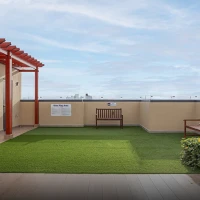
With no land left to build outward, we are building upward. Vertical living is now the standard in Malé. Since the Greater Malé Region has one of the highest population densities on the planet (Maldives Bureau of Statistics, 2023), apartment developments are the primary solution. For investors, apartments for sale in the Maldives, particularly high-rises with elevators, security, and shared rooftop spaces offer much higher rental yields than traditional low-rise buildings.
3. The "Bridge Effect"
Infrastructure is the biggest driver of property demand right now. The Sinamalé Bridge completely transformed how we view the city, turning Hulhumalé into a primary residential choice (Asian Development Bank, 2019). As connectivity improves, smart investors are looking at areas near transport hubs. If it’s easy to get to by ferry or bridge, the property value is almost guaranteed to climb.
4. Small is Smart
The days of the massive family home are shifting. We’re seeing a move toward smaller, independent households as the economy develops (United Nations, 2018). This means compact house designs such as studio apartments and one-bedroom units are gold for investors: they are cheaper to buy, easy to rent out to young professionals, and require way less maintenance.
5. Green is the Future
In a country as vulnerable as the Maldives, "going green" isn't just a trend; it's survival. Renters are starting to look for "smart" features and energy-efficient designs to keep costs down (IEA, 2022). Real estate developers are coming up with properties that include sustainable features aren't just good for the planet—they are more resilient to market changes and keep their value much longer (IPCC, 2022).
The Bottom Line
Investing in Malé today isn't just about picking a spot on a map. It’s about understanding the "new" Malé resident: someone who wants a compact, smart, and well-connected home. If you align your investment with how people actually want to live, you’re setting yourself up for long-term success. This is where top real estate developers like Tata Housing Male are changing the game.
Disclaimer: The contents of this blog are provided by a third-party vendor on behalf of Tata Housing. All rights, including copyright, to the content within this blog remain the sole property of Tata Housing. The information and opinions expressed in the blog posts are those of the third-party vendor and do not necessarily reflect the views or opinions of Tata Housing. While we strive for accuracy and quality, we do not guarantee the completeness, accuracy, or reliability of the information presented in these blog posts. Readers are encouraged to consult additional sources and exercise their own judgment when interpreting or implementing any information found in this blog. Tata Housing is not responsible for any actions taken based on the information provided in these blog posts, and we disclaim any liability for errors, omissions, or consequences arising from the use of this content.